
Insert Town Name Here
What’s the Story Behind Germany’s Minimalist Fan Banners?

If you’ve ever watched Germany play at a major tournament, chances are your attention has shifted to the stands and landed on something eye-catching. But eye-catching for its plainness.
A big white banner. Bold black letters. Maybe vice versa. One word: Spenge. Or maybe Wanne-Eickel, Bitburg, Bad Imnau or Aschaffenburg.
No messages, badges or club colours. Just a town name on a blank canvas. Simple, almost boring, until you realise these banners are actually part of a quietly brilliant German fan tradition that goes back decades. So what’s the deal?
These banners are, very simply, the Germans’ way of saying: “We’re here. And we’ve come from [insert town name here].”
They’re brought by local fans who’ve made the journey to support the national team, and proudly draped across railings, overhangs and stadium fences across Europe and beyond.
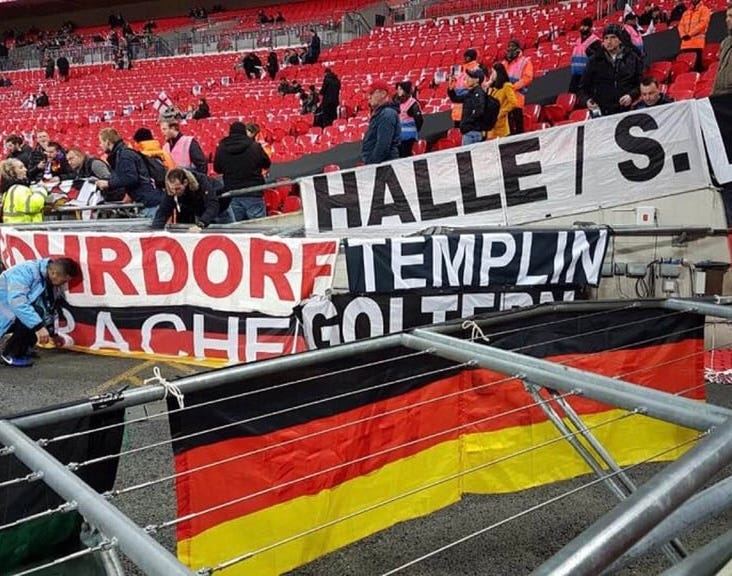
The names may mean little to outsiders, but to Germans, they’re important. They represent local identity within a densely-populated and football-loving country. A fan from a small, unremarkable town in Saxony can be as much a part of the national support as an ultras group from Borussia Dortmund.
And many of these tiny town and remote village banners are now legendary. You’ll spot some of them at every Germany game, home or away. An understated fixture of the fan scene, its presence says as much about commitment as any banner.
What’s striking to the fans of other nations is the total minimalism of these flags. Typically with solid white, black or red backgrounds, and with bold, capitalised lettering in an easily readable font.
This simplicity isn’t laziness. German fan groups tend to value function over flair. The goal is visibility and legibility.
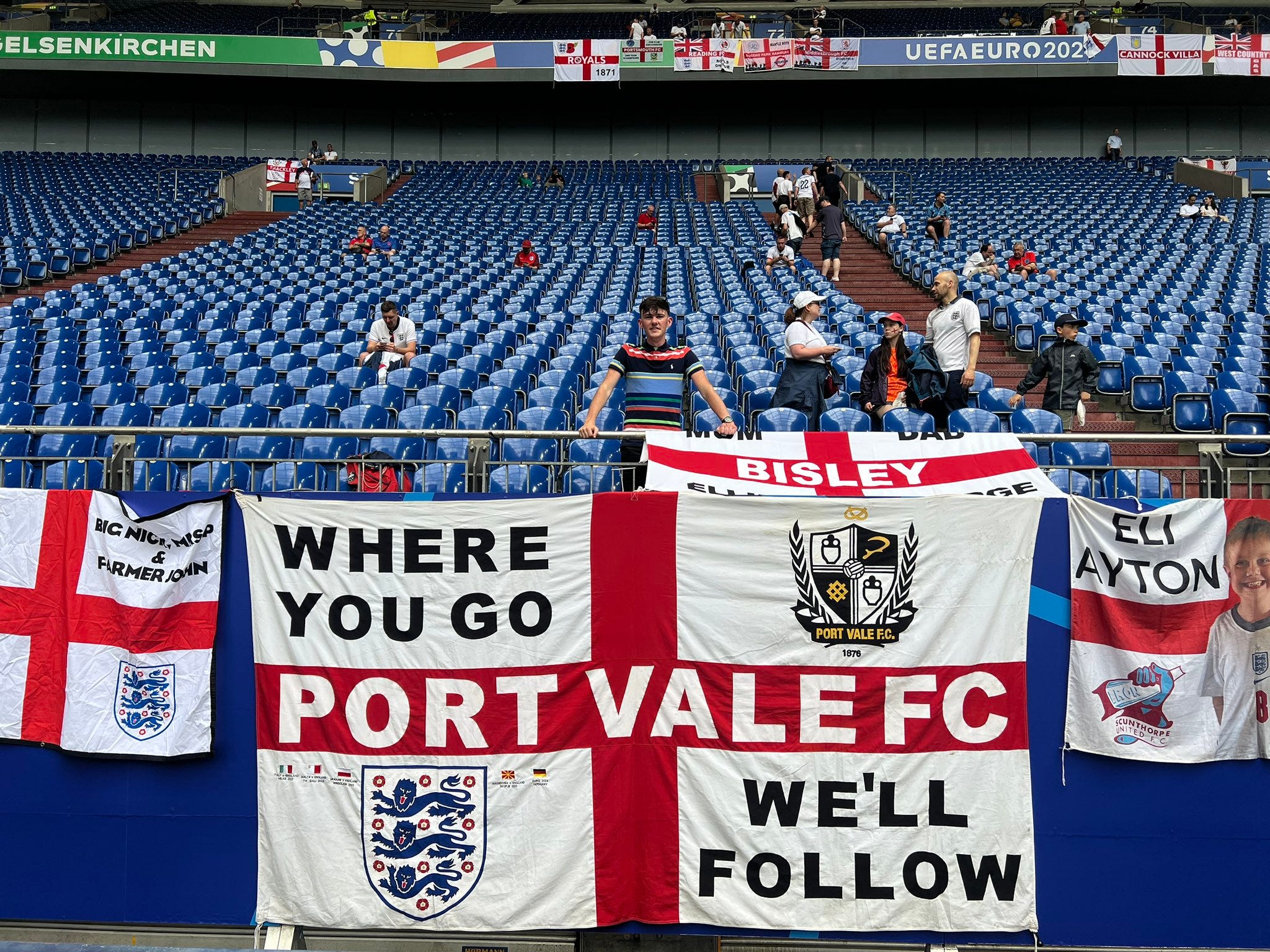
Contrast this with England fans’ famous St George’s Cross banners - a similar tradition in spirit. Supporters pin up flags bearing their hometowns. Think Walsall, Yeovil, Ellesmere Port or Maidstone.
But the English approach tends to be more decorative: Lions, club badges, poppies and union jacks. They sometimes carry a slogan like ‘For King and Country’ or ‘[Insert Club Name Here] On Tour’.
Then there’s the ultras culture on the continent - particularly in Italy and the Balkans - where banners are often massive, choreographed affairs incorporating pyro, political messaging and intricate artwork.
These tifos are meant to intimidate or inspire. On the other hand, German town banners simply say: “We’re here”.
Germany’s banners don’t just appear by chance. They’re usually organised by local fan groups, many of them members of the DFB-Fanclub, the official network supporting the German national team. These clubs arrange tickets, travel and logistics for members. The banner is part of this community identity.
With Euro 2024 hosted in Germany, these banners were expectedly everywhere. From Hamburg to Munich, stadium fences were draped with names of places you’ve never heard of - each produced by proud locals who want to put their hometown on the map for 90 minutes.
Sometimes a plain white sheet with one word says more than any tifo ever could. So next time you’re watching a Germany match and you see one of these banners, don’t just overlook it. The name tells a story of the fans’ travel, tradition and a town that’s proud to be part of something bigger.
Love this, and nice focus on something I'll never be aware of. Same tradition here in Argentina.
Nice article (and love the shoutout to Bielefeld's own Spenge) but there is a bit of a false dichotomy there, pitching these simple banners against full-fledged Tifos. These banners are just one part of German fan culture – right down to 3. Liga there are massive Tifos in German football too on a regular basis. For example, here is the overview of the best Tifos from 3. liga last season: https://www.liga3-online.de/jetzt-abstimmen-die-schoenste-choreo-der-saison-24-25/